Albany · Colonie · Clifton Park
Septic System Installation in Albany, NY
Albany Septic Pros is a septic system installation and replacement company serving Albany, Colonie and the Capital Region. New systems, tank replacements, and leach field work — designed around the clay soils and spring-high water tables that decide what your lot can actually support, and built to pass county health review the first time.
- ▸ Free on-site septic evaluations
- ▸ Systems designed to NYS Appendix 75-A standards and county health review
- ▸ Conventional, engineered, and mound systems — new installs and full replacements
Get Started
Free, itemized on-site evaluations
Tell us about the property and the system — we’ll take it from there.
- ▸ We come out, locate the tank and field, and assess the site, soils, and system history in person.
- ▸ You get the full scope in writing — tank, distribution box, field, engineering, and permits on separate lines.
- ▸ No obligation, and no sight-unseen pricing.
Prefer to talk it through? Call (518) 818-6966
What We Do
Septic installation and replacement, end to end
From a one-day tank swap to a fully engineered mound system — we match the design to what your soil, water table, and county health department actually require.

Septic System Installation
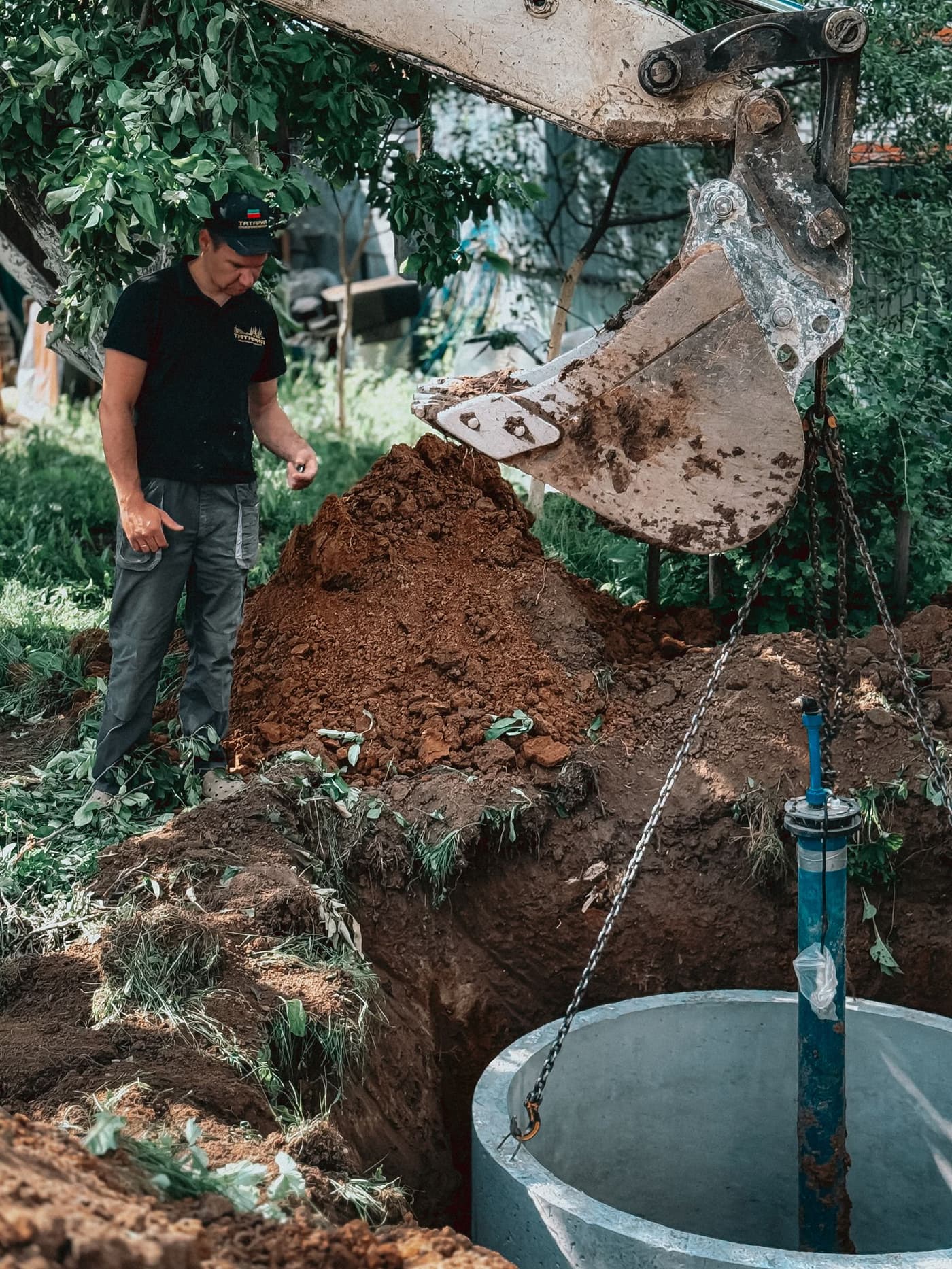
A complete new system — tank, distribution box, and absorption field — designed from your lot's soil and perc data and permitted through the county health department before a shovel touches dirt. Gravity where the site allows it, pump systems where it doesn't.
Learn more →
Septic Tank & System Replacement
Steel tanks from the 60s, cracked concrete, a system that backs up every spring — we replace like-for-like tanks in a day or two, and handle the engineer-and-permit sequence when the county requires a full new system instead of a swap.
Learn more →
Septic Repair
A failing system does not always mean a new one. A cracked baffle, a collapsed distribution box, a crushed line or a burnt-out pump are repairs — often a fraction of what a replacement costs. We find which fault you actually have before anyone quotes you a new field.
Learn more →
Leach Field Replacement & Repair
Soggy stripes over the field, sewage smell after rain, slow drains in a house with a healthy tank — that's the field, not the tank. We repair single lines and distribution boxes where the county allows it, and rebuild full fields where it doesn't.
Learn more →
Engineered & Mound Systems
When the water table sits high or the perc rate runs slow — common across the Capital Region — the county will require an engineer-designed system: raised fill, mound, or pump-dosed. We build them to the stamped plan, sand spec and all.
Learn more →
What Septic Systems Cost
Identical-sounding jobs run $6,000 for a tank swap and $50,000 for an engineered system — and there are real reasons why. Our cost guide breaks down what each part of the job costs and the four site factors that move the number.
Learn more → Free On-Site Evaluations
We come out, locate the tank and field, look at the site's grade, soils, and history in person — then put a written scope in your hand. No sight-unseen pricing, no obligation.
Learn more →The Work
Septic work we do across the Capital Region

New System Installs
Tank, distribution box, and absorption field — designed from soil data and set, plumbed, and graded as one job.

Tank & System Replacements
Old steel and cracked concrete tanks out, code-compliant systems in — with the permit trail done right.

Engineered & Mound Builds
Raised-fill and pump-dosed systems built to the stamped plan for high water tables and slow soils.
Built for the Capital Region
Why septic work around Albany is different
Albany itself runs on sewers — but step past the district lines into the hamlets of Albany County, southern Saratoga County, or rural Rensselaer and Schenectady County, and homes run on their own septic systems. Out here, what you're allowed to build isn't decided by the house. It's decided by the ground under it.
The short version: two numbers control every septic project in this region — how fast your soil drains (the percolation rate) and how high the groundwater rises in spring. Together they decide whether your lot supports a conventional trench system or requires an engineer-designed raised or mound system at a very different price. Everything else is built around those two facts.
What the ground here does to septic design
Glacial lake clays and silts. Much of the Albany area sits on the bed of glacial Lake Albany — dense clay and silt deposits that drain slowly. A slow percolation rate doesn't "fail" a lot; it feeds a formula in New York's design standards (NYS DOH Appendix 75-A) that demands a larger absorption field, imported fill, or a fully engineered system to compensate.
The spring water table. The classic Capital Region septic complaint is a system that works fine all summer and backs up in March. That's the seasonal high water table rising into the absorption field. State standards require vertical separation between the field and groundwater — and when a test hole shows the water table sits high, that's what pushes a design up out of the ground into a raised-fill or mound system.
Real winters. Frost depth shapes both the calendar and the design here. Deep excavation and concrete work get harder (and sometimes costlier) mid-winter, and a shallow system needs proper cover to run through a Capital Region January. It's a reason to plan a known-failing system's replacement in the April–November window instead of as a February emergency.
Old systems, thin records. The housing stock outside the sewer lines runs from pre-war farmhouses to 1970s subdivisions, and plenty still sit on steel tanks, cesspools, or systems nobody ever permitted. Town and county records are famously spotty — health departments often don't hold them at all. Part of our evaluation is simply establishing what is actually in your yard before anyone talks price.
Septic country across the Capital Region
- Albany County's hamlets. Loudonville, Slingerlands, Voorheesville, Feura Bush, and the rural stretches of New Scotland and Berne — larger lots just past the sewer districts, many with systems now decades past their design life.
- Southern Saratoga County. The growth belt around Clifton Park, Halfmoon, and Ballston mixes newer engineered systems on tight lots with older conventional fields on the back roads.
- Rensselaer County. East Greenbush, North Greenbush, and Schodack's rural roads are classic tank-and-field territory over variable clay and shale ground.
- Lake and camp properties to the north. Older lakeside systems face growing scrutiny — the Lake George Park Commission now runs a formal septic inspection program — and waterfront setback rules make replacements there genuine engineering projects.
How to compare septic contractors around Albany
Septic quotes in this region legitimately run from a few thousand dollars to fifty — which makes it easy to be quoted the wrong system in either direction. A few questions sort it out fast:
- Is this a tank swap or a system job? A like-for-like tank replacement is a straightforward one-to-two-day job. New systems and field work need a design and a county health department permit — a contractor who quotes a full system sight-unseen, without soil data, is guessing with your money.
- Who does the design? For engineered work, the honest sequence in New York is engineer first, then permits, then bids against the stamped plan. Getting "quotes" before a design exists produces numbers that mean nothing.
- Who pulls the permit? The answer should be the contractor, through your county health department — not you, and never "we don't bother."
- Have you asked about state money? New York's State Septic System Replacement Fund (run through the Environmental Facilities Corporation) reimburses part of eligible replacement costs in participating counties. Participation varies county to county — it costs nothing to ask, and a contractor working this region should know the current answer.
- Is the scope itemized? Tank, distribution box, field, engineering, permit fees, and yard restoration should be separate lines. Lumped pricing is where surprise costs hide.
On every system we install across Albany and the Capital Region, we start with the soil and the water table, design to the county's requirements, and quote in writing — itemized, against a real evaluation of your lot.
Get a free on-site septic evaluation in Albany → (518) 818-6966
Where We Work
Serving Albany & the Capital Region
We install and replace septic systems across Albany and the surrounding the Capital Region — Colonie, Clifton Park, East Greenbush, Guilderland, and beyond. Not sure if you’re in range? Call — we very likely cover you.
Albany-Area Hamlets
- ▸ Loudonville
- ▸ Slingerlands
- ▸ Voorheesville
- ▸ Feura Bush
- ▸ Altamont
Common Questions
Albany Septic System FAQs
How much does a septic system cost in the Albany area? +
It depends almost entirely on scope. A like-for-like tank replacement typically runs $5,000–$8,000 — Capital Region homeowners have reported paying about $6,700 for a recent tank swap. A full conventional system (tank plus new absorption field) generally runs $12,000–$25,000, with a local tank-and-field replacement reported at about $14,000. An engineered or mound system — required when the water table is high or the soil percs slowly — runs $25,000–$50,000+. Our cost guide breaks down exactly what moves the number.
Why am I being told I need an engineered or mound system? +
Because of your ground, not your house. A percolation test doesn't pass or fail — it produces a rate that feeds New York's design formula. When the soil drains too slowly, bedrock sits shallow, or the seasonal water table rises too close to the surface, state standards require more vertical separation than a conventional buried field can provide — so the design comes up out of the ground as a raised-fill or mound system, engineered and stamped. It costs more because of the imported sand, the pump, and the engineering, not because anyone is padding the job.
How long does a septic system last? +
Split it by component and the conflicting answers you hear make sense. A concrete tank commonly lasts 40+ years; old steel tanks rust out much sooner. The absorption field is the part that actually wears out — 20 to 30 years is typical, longer with regular pumping and light water use. Pumps and distribution boxes fall in between. That's why a '40-year-old system' can be fine or can be one wet spring from failure — the tank's age and the field's age tell different stories.
Do I need an engineer or a permit to replace a septic system in New York? +
For a like-for-like tank swap, usually no engineer — it's a straightforward permitted repair in most towns. For a new system, a replacement field, or any expansion, yes: county health departments require a design that meets NYS DOH Appendix 75-A standards, which for engineered systems means stamped plans before anyone can bid the job accurately. We handle that sequence — evaluation, design coordination, permit, install — as one scope.
Is there state money to help replace a failing system? +
Sometimes, yes. New York's State Septic System Replacement Fund, administered through the Environmental Facilities Corporation, reimburses a portion of eligible replacement costs — but each county decides whether and how it participates, and priority often goes to systems near water bodies. It costs nothing to check your county's current status before you sign anything, and we'll tell you what we're seeing locally during the evaluation.
How do I find my septic system's records? +
Start with your town building department, then the county health department — and be prepared for both to come up empty, especially for systems installed decades ago. Missing records are one of the most common Capital Region septic surprises, including systems that were never permitted at all. If the paper trail is gone, a physical evaluation — locating the tank and field, checking measurements and condition — rebuilds the picture. We do that as part of every free evaluation.
How often should a septic tank be pumped? +
Every 3 to 5 years for most households, per EPA guidance — more often with a garbage disposal, an undersized tank, or a full house. Regular pumping is the cheapest insurance a septic owner has: it protects the absorption field, which is the expensive half of the system. What pumping can't do is fix a field that's already failing — no additive or enzyme product does that, whatever the label says.
Do you serve the towns around Albany too? +
Yes. We cover Albany plus Colonie, Clifton Park, East Greenbush, Guilderland, Ballston Spa, and Schenectady, along with the surrounding hamlets — Loudonville, Slingerlands, Voorheesville, Feura Bush, Altamont — and the rural roads of Albany, Saratoga, Rensselaer, and Schenectady counties. Tell us where the property is when you reach out and we'll confirm we cover you.
Slow drains, wet spots over the field, or a tank past its time?
Get a free, on-site septic evaluation anywhere in Albany, Colonie, Clifton Park, East Greenbush, or the surrounding Capital Region.