 Albany Septic Pros
Buying a House with a Septic System: The Upstate New York Buyer's Guide
Buying a house with a septic system in New York means checking a costly, buried system yourself, because no state rule does it for you. This guide is the buyer's version of what a septic contractor looks at. Albany Septic Pros is a referral service for septic work in Albany and the Capital Region. Already under contract? Book a septic inspection inside your contingency window — send us the address and we pass it to a local contractor.
What's in this guide
- The 5-step playbook
- Home inspection vs septic inspection
- Well & septic distances your loan checks
- New York's septic disclosure — and the loophole that closed in 2024
- Upstate & Capital Region specifics
- Negotiating around what the inspection finds
- Buying-on-septic questions, answered
- The bottom line on buying a house with a septic system
Under contract on a house with a septic system? Book the septic inspection the day you sign, so its written result lands before your inspection contingency ends. Call (518) 818-6966 or send us the address.
The 5-step playbook
When you are buying a house with a septic system, five things come up between the offer and the closing. Here they are in order.
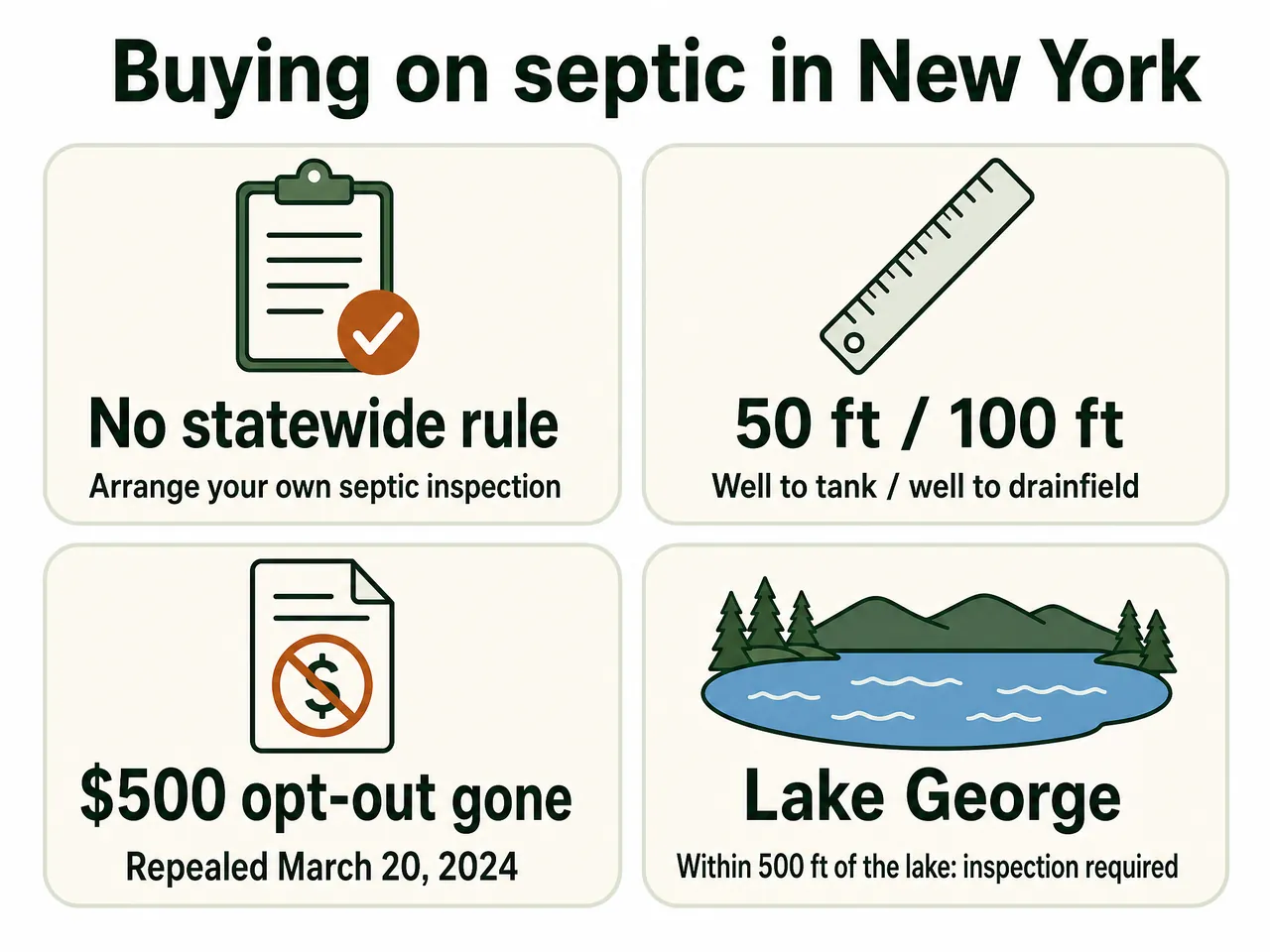
- Step 1 Get a real septic inspection, not just the home inspection. A general home inspection does not open the tank or test the drainfield. New York has no statewide point-of-sale septic rule. So in most of the state, a septic inspection only happens if you book one. The EPA urges buyers to have a septic service provider inspect the system before they buy. What a septic inspection covers, costs, and how to read the report →
- Step 2 Find out what your lender requires to close. FHA, VA and USDA loans all require a working septic system. They generally won't close on a failed one. They also check the distance between a private well and the septic parts (see the diagram below). A failure found here can stall the closing until it is fixed.
- Step 3 Read New York's disclosure statement, and know what changed in 2024. The seller must give you a Property Condition Disclosure Statement before you sign a binding contract. It asks about the septic system. Sellers used to be able to pay $500 instead of disclosing. That loophole was repealed in 2024, so a real disclosure is now the norm.
- Step 4 Chase the records, and watch for an unpermitted system. Ask the town or county health department for the permit and the as-built drawing. Be ready for a blank: many New York health departments don't keep septic records for each house. An unpermitted, 'bootlegged' system found at or after the sale can become your problem. Check permits during your contingency period, not after closing. How New York septic permits work, and what a blank record means →
- Step 5 Negotiate around what the inspection actually finds. A failed system cuts the home's value by about what a new one costs. Lenders won't fund a failed septic, so that is real leverage. An old system that passes is weak leverage on age alone. Turn any failure into a written contractor quote, then ask for a repair, a price cut or an escrow holdback.
Home inspection vs septic inspection
The general inspection most buyers already book is not a septic inspection. Here is what each one looks at, per the EPA's homebuyer guide.
| Checks | Septic inspection | General home inspection |
|---|---|---|
| Opens the tank | Yes | No |
| Sludge and scum levels | Yes | No |
| Tank, inlet and outlet integrity | Yes | No |
| Drainfield checked for standing water | Yes | No |
| Distribution box checked for even flow | Yes | No |
| Pumping and maintenance records, system age | Yes | No |
| Loads the system to confirm it works today | Yes, on a standard point-of-sale inspection | No |
The full scope, the cost and how to read the report are on septic inspection when buying a house.
Well & septic distances your loan checks
If the home has a private well, FHA and USDA loans check the separation between it and the septic system. Miss these and the loan can be held up until it's cured.
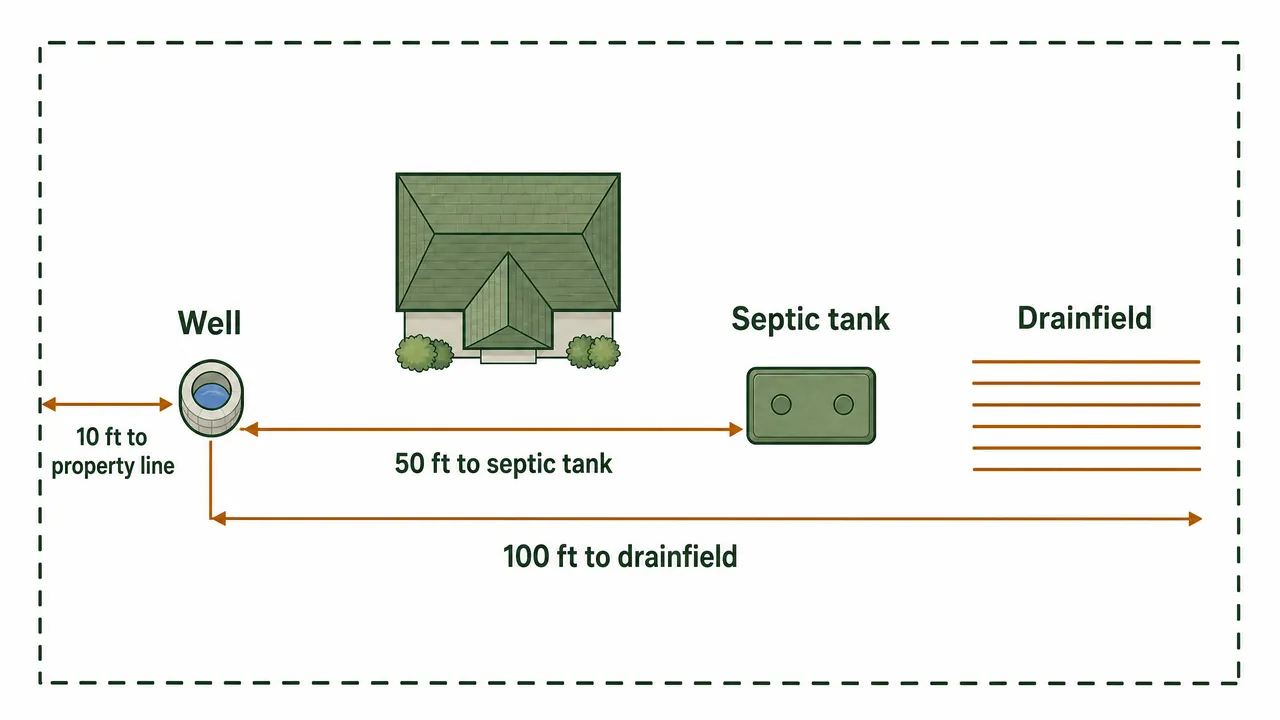
The drainfield distance can drop to 75 feet where the local authority allows. If local rules are stricter than HUD's, the stricter distance governs.
| Loan | Septic requirement |
|---|---|
| FHA | The onsite system must be functional and acceptable to the local health authority; the appraiser must require repair or further inspection on any sign of failure (HUD Handbook 4000.1). |
| VA | Adequate sewage disposal with no health hazard; repairs required before closing (VA Minimum Property Requirements). |
| USDA | A functioning system, with the same well distances as FHA. |
New York's septic disclosure — and the loophole that closed in 2024
New York's Property Condition Disclosure Act (Real Property Law Article 14) says the seller must give you a completed disclosure statement before you sign a binding contract. It asks the type of sewage system. For a septic system, it asks the age, when it was last pumped, how often, and any known defects.
Sources: NY Real Property Law Article 14 §462. The NYS Department of State disclosure form (current). The New York State Bar Association's analysis of Chapter 484, Laws of 2023.
Upstate & Capital Region specifics
Whether a pre-purchase septic inspection is your choice or the law depends on where the house sits.
| Albany, Rensselaer, Saratoga, Schenectady | Lake George Park (Warren County) | |
|---|---|---|
| Pre-purchase septic inspection | Buyer-arranged | Recurring inspection required near the lake |
| Who it covers | Any house on septic, on the unsewered roads | Systems within 500 ft of the lake or 100 ft of a regulated stream |
| Rule | No statewide point-of-sale mandate | 6 NYCRR 646-3.6: inspection and pump-out every 5 years |
| At sale | Your inspection, your contingency | A property-transfer inspection through the Towns of Queensbury or Bolton can satisfy it |
Near the lake, recent program inspections found roughly half of systems not fully passing, so a pre-purchase inspection there is essential. Source: Lake George Park Commission, 6 NYCRR 646-3.
Whatever the inspection finds, know what a fix could cost before you negotiate. A tank swap and a full replacement are very different numbers. The Albany septic cost guide and the replacement cost breakdown give you the figures to anchor a credit or holdback.
Negotiating around what the inspection finds
Negotiation outcomes are common real-estate practice, not legal rules. What gives you leverage and what doesn't:
Real leverage
- A failed system. It cuts the home's value by roughly its replacement cost, and lenders won't fund it.
- A written replacement or repair quote, to anchor the number.
Weak leverage
- A system that passes but is old. Age alone moves few sellers.
- A problem found after closing, when the contingency has ended.
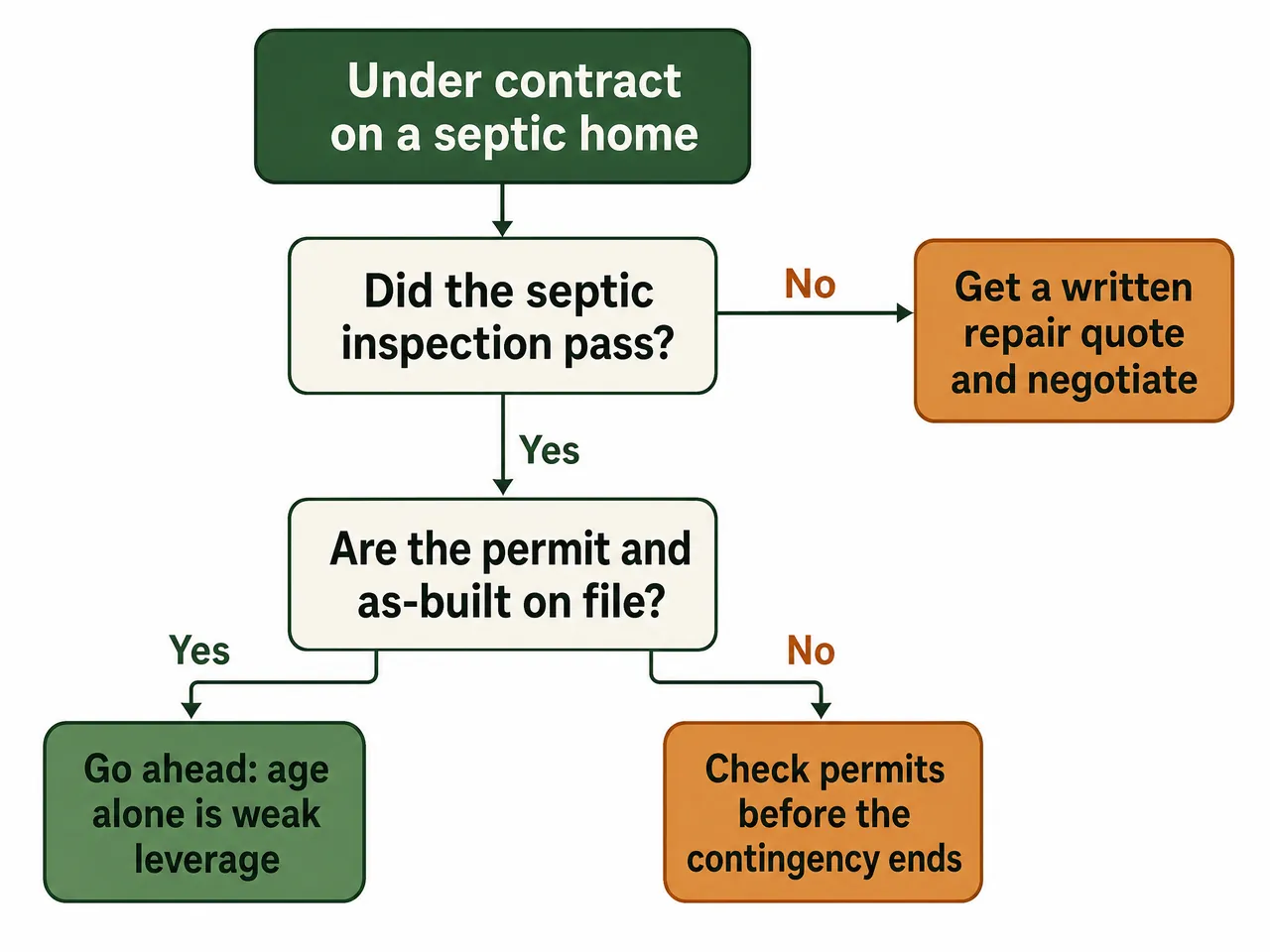
With a failure in hand, sellers usually do one of three things: repair it, cut the price, or fund an escrow holdback.
Buying-on-septic questions, answered
Do I need a septic inspection when buying a house in New York?
In most of the state, only if you book one. New York has no statewide point-of-sale septic rule. The EPA still urges buyers to get the system inspected by a septic service provider, because a general home inspection doesn't open the tank or test the drainfield. Your lender may require it. Near Lake George, a transfer inspection can be mandatory.
What does a septic inspection actually cover?
Much more than a home inspector's walk-by. Per the EPA, the inspector checks the pumping and maintenance records and the system's age. They measure the sludge and scum, and check the tank, inlet and outlet. They look for standing water on the drainfield and check that the distribution box splits the flow evenly. They also check records that the system meets local rules. A standard point-of-sale inspection also runs water through the system to show it works today.
Will a lender refuse to close if the septic fails?
Generally, yes. FHA (HUD Handbook 4000.1) requires a working system that the local health authority accepts. The appraiser must call for a repair or more inspection at any sign of failure. VA loans require safe sewage disposal and repairs before closing. A failed septic usually stops a financed sale until it is fixed.
How far does a well have to be from the septic system for an FHA or USDA loan?
Under HUD Handbook 4000.1, a well must be at least 10 feet from the property line, 50 feet from the septic tank and 100 feet from the drainfield. The drainfield distance can drop to 75 feet only if the local authority allows it. FHA and USDA use the same distances. If local rules are stricter, the stricter distance applies. Failing them can block the loan until it is fixed.
Does New York's disclosure form make the seller tell me about the septic system?
Yes. New York's Property Condition Disclosure Act (Real Property Law Article 14) says the seller must give you a disclosure statement before you sign a binding contract. It asks the type of sewage system. For a septic system it asks the age, the last pump-out, how often it is pumped and any known defects. The seller only has to say what they actually know. A knowingly false answer can open them to claims from the buyer.
Can a New York seller just pay $500 instead of disclosing?
Not anymore. The $500-credit option was repealed effective March 20, 2024 (Chapter 484 of the Laws of 2023). The current form has no $500 credit at all. A completed disclosure statement is now the norm, though what happens when a seller fails to deliver one became unclear after the change.
What if there are no records, or the septic system was never permitted?
Records are often thin. The EPA says to ask the local health department for the as-built drawing, but many New York health departments don't keep septic records for each house. Worse, an unpermitted 'bootlegged' system found at sale can become your problem. Counties have made buyers install a system that meets code. Check permits during your contingency period, not after closing.
How much can I negotiate if the septic fails inspection?
A failed system cuts the home's value by about what a new one costs. It never adds value. Lenders won't fund a failed septic, so you have real leverage: sellers repair it, cut the price or fund an escrow holdback. Get a written repair or replacement quote to anchor the number. An old system that passes is weak leverage on age alone.
Is a septic inspection required near Lake George?
It can be. Under 6 NYCRR 646-3.6, systems within 500 feet of Lake George, or 100 feet of a DEC-regulated stream, need an inspection and pump-out every 5 years. A property-transfer inspection through the Town of Queensbury or Bolton (Warren County) meets that rule. Recent program inspections found about half of systems not fully passing, so a pre-purchase inspection there is essential.
The bottom line on buying a house with a septic system
This guide is general information, not legal advice. Confirm current requirements with your lender, attorney, and the county health department for the property.
Sources we checked
- A Homebuyer's Guide to Septic Systems , U.S. Environmental Protection Agency, checked July 2026
- Single Family Housing Policy Handbook 4000.1 (well and septic distances, functionality) , U.S. Department of Housing and Urban Development (FHA), checked July 2026
- Real Property Law Article 14, §462 (Property Condition Disclosure Statement) , New York State Senate, checked July 2026
- 6 NYCRR 646-3, wastewater management and septic inspection program , Lake George Park Commission, checked July 2026